Cheese Pizza Done Right: A Guide to Classic Flavor
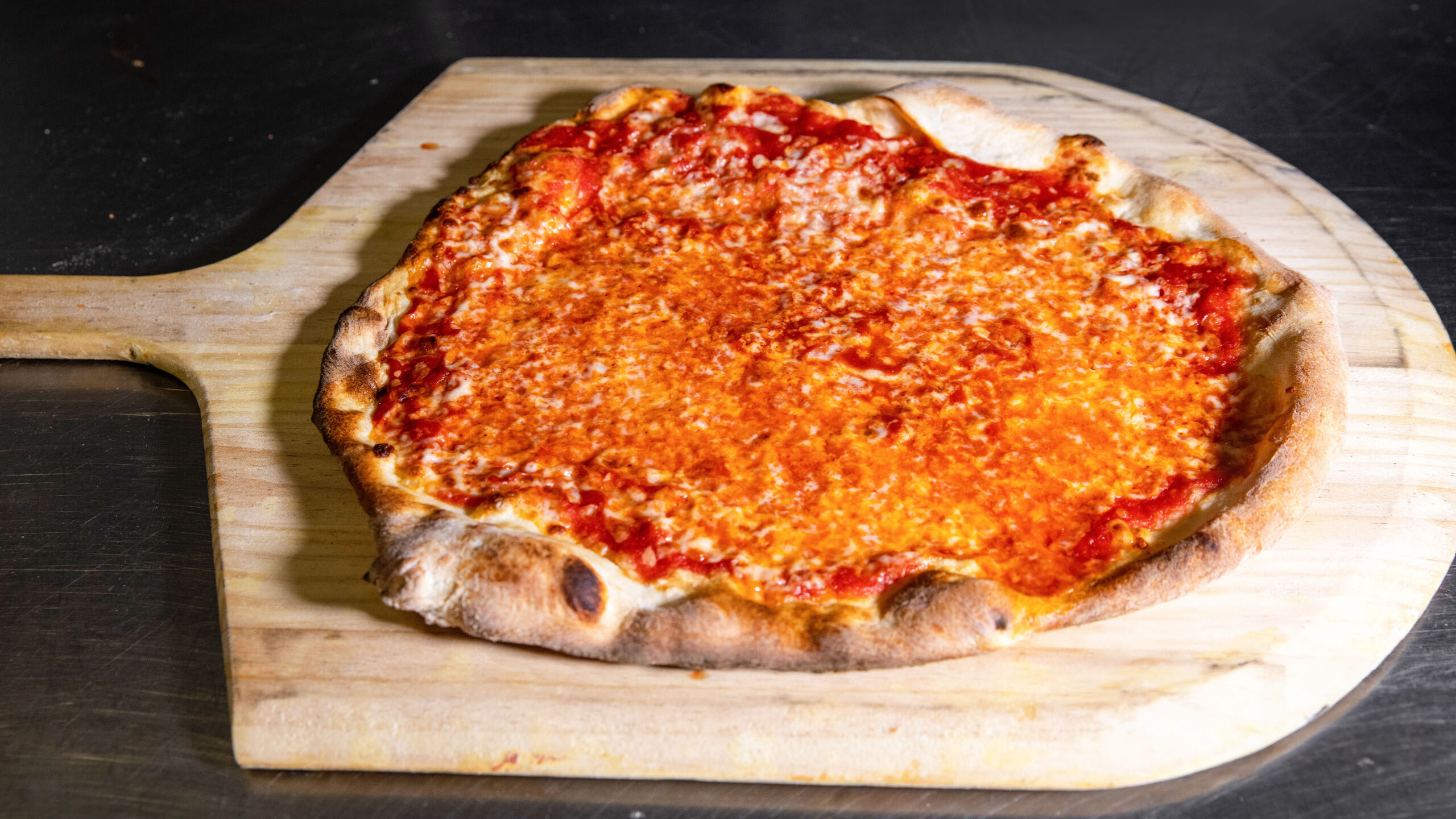
Cheese Pizza looks simple, which is exactly why it exposes every weak decision. With no pepperoni, sausage, peppers, or olives to distract the palate, the crust, sauce, and cheese have nowhere to hide. A great one tastes balanced and complete. A mediocre one tastes flat, greasy, or oddly sweet. The gap between those two outcomes is not luck. It comes from paying attention to a handful of details that too many cooks rush past.
That is part of the appeal. Cheese Pizza is one of the clearest expressions of craft in the pizza world. It rewards restraint more than excess. It asks you to think about fermentation, moisture, browning, milk solids, acidity, and heat management, but it delivers those lessons in a form almost everyone loves. Done right, it is crisp where it should be crisp, tender where it should be tender, and deeply savory without feeling heavy.
I have always found that people underestimate the discipline of a classic pie. Home cooks often assume the answer is more cheese. Restaurant kitchens sometimes lean on aggressive sauce seasoning or too much oil. Neither approach solves the real problem. The best Cheese Pizza is not overloaded. It is composed.
Why the plain pie is harder than it looks
A fully topped pizza can survive small flaws. If the dough is a little underdeveloped, spicy meat and roasted vegetables can mask the weakness. If the sauce is a touch bland, cured pork can carry the flavor. Cheese Pizza offers no such cover. Each component lands on the tongue in clear sequence: crust first, then tomato, then dairy, then the toasted notes from the bake. If one element is off, you notice.
That is especially true with texture. Good pizza crust should have structure underneath the toppings. It should bend without collapsing and bite cleanly without turning leathery. A Cheese Pizza with soggy center dough feels unfinished. One with too much color on the bottom and pale cheese on top tastes disjointed, as if the crust and topping were baked in separate ovens. Harmony matters more than flash.
There is also the issue of balance. Cheese is rich and naturally salty. Tomato sauce brings acid and sweetness. Dough contributes wheat flavor, fermentation character, and a mild bitterness from browning. When the ratios are right, the pie tastes fuller than the sum of its parts. When they are wrong, even expensive ingredients cannot save it.
Start with dough that has some maturity
If you want a better Cheese Pizza, the most reliable upgrade is not exotic flour or imported tomatoes. It is time. Dough improves when it has a chance to ferment properly. A same-day dough can work, but it rarely develops the flavor and handling qualities of one made a day or two in advance.
Cold fermentation changes the dough in useful ways. It deepens flavor, improves extensibility, and often helps browning. A 24 to 72 hour rest in the refrigerator is a practical range for most home cooks. That does not mean every dough should sit for three days. There is a trade-off. Longer fermentation can produce more complexity, but it can also make dough feel gassier, looser, and a little more delicate to shape. For Cheese Pizza, where clean structure matters, a 24 to 48 hour window often hits the sweet spot.
Hydration matters too. For a home oven, many cooks do well somewhere around the low to mid 60 percent range, though that depends on flour type and handling skill. A wetter dough can produce a lighter interior and a more open crumb, but it is also trickier to shape and more vulnerable to sticking or tearing. A slightly more moderate hydration often produces a dependable result with enough tenderness and less stress.
Salt is not a background detail. Under-salted dough tastes lifeless, especially on a plain pie. Over-salted dough can fight the cheese. The goal is seasoning that supports the wheat flavor and gives the crust a finished taste on its own. If you tear off a baked edge and it tastes good without any topping attached, you are on the right path.
Flour, texture, and the kind of pie you want to eat
Not every Cheese Pizza should have the same crust. New York style, a classic American pizzeria pie, values a crisp underside, a foldable slice, and enough chew to feel substantial. Neapolitan style aims for a softer center, dramatic oven spring at the rim, and a very quick bake. Pan pizzas chase a different pleasure altogether, with fried edges and a more buttery crunch.
The flour should serve the style, not the other way around. Higher protein flour can help with stretch and structure, especially for hotter bakes and thinner pies. All-purpose flour can still make excellent pizza, particularly in home kitchens where oven limitations matter more than abstract flour specifications. I have seen many home cooks improve their results by changing technique before changing flour. Better fermentation, gentler shaping, and stronger heat often make a larger difference than switching brands.
One recurring mistake is trying to force a pizzeria texture out of a weak home setup by making the dough too dry or too thick. That usually backfires. A better strategy is to shape a pie that suits your oven, whether that means a modestly sized round on steel, a pan pizza with generous edge contact, or a slightly smaller pie that is easier to launch and bake evenly.
Sauce should support, not dominate
Cheese Pizza needs sauce with clarity. It should taste unmistakably like tomato, but not like tomato soup, not like spaghetti sauce, and not like a sugar delivery system. The best pizza sauces are often simpler than people expect. Good canned tomatoes, a measured amount of salt, and perhaps a modest touch of olive oil are often enough.
Cooking the sauce in advance is not always necessary. In fact, for many pizza styles, an uncooked sauce made from crushed or milled tomatoes gives a fresher result. The heat of the oven does the final work. Pre-cooked sauces can become too reduced, too sweet, or too dense, especially in home ovens that already require longer bake times than commercial decks.
Garlic, oregano, basil, chile flakes, onion powder, and sugar all have their place, but every addition shifts the profile. On a heavily topped pie, stronger seasoning may read as lively. On Cheese Pizza, it can taste busy. A restrained hand usually wins. If your tomatoes are sharply acidic, a little adjustment makes sense. If they are naturally balanced, leave them mostly alone.
The quantity matters as much as the formula. Too much sauce cools the dough surface, slows setting, and creates a wet center. Too little leaves the pie feeling dry and overly dairy-forward. You want enough to coat the dough with confidence, but not so much that it pools under the cheese. A good visual cue is complete but thin coverage, with no heavy mounds and no bare islands in the middle.
The cheese question is really several questions
People often say “mozzarella” as if that settles it. It does not. There is a major difference between fresh mozzarella packed in liquid and low-moisture mozzarella designed for melting and browning. There are also differences between whole-milk and part-skim versions, and those differences shape both flavor and performance.
For many classic American Cheese Pizza styles, low-moisture whole-milk mozzarella is hard to beat. It melts evenly, browns well, tastes rich without flooding the pie, and gives that familiar stretch most people expect. Part-skim can work, especially if you prefer a firmer set and less grease, but it may not deliver the same depth. Fresh mozzarella has beautiful dairy flavor, though it requires moisture management and suits some styles better than others. On a home-baked thin pie, too much fresh mozzarella often leads to wet patches and uneven cooking.
Blending cheeses can improve both flavor and texture. A small amount of provolone can add tang and complexity. Pecorino or Parmigiano-Reggiano can sharpen the finish. The key is proportion. Once secondary cheeses dominate, you are no longer showcasing the classic Cheese Pizza flavor most people picture.
Even shredding matters. Pre-shredded cheese is convenient, but anti-caking agents can interfere with the melt. Hand-shredded cheese usually melts more smoothly. If you use fresh mozzarella, draining and blotting it is essential. Otherwise, the water ends up in the crust.
Here is where many home pies go wrong: the cheese blanket is too thick. A good Cheese Pizza should not look insulated. You want full coverage, but still enough variation in the surface for spots of sauce to peek through and for the cheese to blister rather than steam. Thick piles of cheese melt into a heavy layer that slides off in one sheet. That is not generosity. That is poor proportion.
Heat is an ingredient, not just a setting
People tend to talk about oven temperature as if the number alone determines the result. It does not. What matters is how much heat the baking surface stores, how efficiently the top of the pizza receives radiant heat, and how quickly the structure sets before moisture turns the center soft.
A pizza steel or stone changes the game because it stabilizes and transfers heat much more effectively than a bare sheet pan. Steel is especially useful in home ovens because it recovers heat quickly and drives strong bottom browning. Preheating matters more than most people think. If the surface has not fully saturated with heat, the first few minutes of the bake become a waiting period, and waiting is the enemy of a crisp crust.
Most home ovens also favor one part of the pie more than another. Some blast the bottom well but struggle to color the top. Others brown cheese fast while the underside lags behind. Learning your oven is part of making better pizza. You may need to preheat longer, move the steel higher or lower, use broiler assistance briefly, or reduce topping load to match the bake profile.
Commercial pizzerias solve these problems with specialized equipment and much higher temperatures, but that does not mean home cooks are doomed to second-tier pizza. It simply means the method has to suit the environment. A Cheese Pizza baked at home can still be excellent if you build around your oven’s strengths instead of fighting its limits.
Shaping and topping are exercises in restraint
The way you open the dough affects the final texture more than beginners realize. Pressing from the center outward while preserving a slight edge helps keep gas in the rim and creates a more attractive cornicione. Overworking the dough with a rolling pin flattens those gases and often produces a denser crust. There are styles where that is acceptable, but for most hand-stretched Cheese Pizza, preserving some internal air gives a better bite.
Topping should happen with intent and without delay. Once sauce hits stretched dough, the clock starts. Letting a dressed pizza sit too long on the peel increases the chance of sticking and weakens the center. This is especially true if the dough is high hydration or the sauce is loose.
If I am helping someone troubleshoot a home pie, I usually ask them to look at four things before they launch it: Is the dough evenly stretched with no paper-thin center? Is the sauce thinly distributed? Is the cheese scattered in a way that encourages even melting rather than forming clumps? Is there enough flour or semolina under the pie to move freely, but not so much that it burns on the steel? Most launch problems begin there.
Common failures and what they actually mean
When Cheese Pizza disappoints, the symptoms tell a story. A pale, soft crust usually points to inadequate heat, insufficient preheat, or overloading with sauce and cheese. A dry, cracker-like crust can signal dough that is too lean, too dry, or simply overbaked. A greasy surface often means too much cheese, overly fatty cheese, or a bake too cool to set things quickly.
The puddles of liquid some people blame on the sauce are often a cheese issue. Fresh mozzarella not properly drained is a frequent culprit. So is adding cheese in dense islands rather than distributing it evenly. Sauce separation can happen too, especially with poor tomatoes or an overworked sauce, but in practice, excess moisture from cheese is one of the more common causes.
If the slice droops from tip to crust, the answer is not always “cook it longer.” Sometimes the dough is too wet for the oven setup. Sometimes the center is stretched too thin. Sometimes the sauce layer is too heavy. Sometimes all three are true. Better pizza comes from diagnosing the right flaw rather than treating every bad slice with more bake time.
A short path to a noticeably better home pie
If you are trying to improve quickly, focus on a few high-impact changes rather than rebuilding your entire process at once.
- Ferment your dough at least overnight, ideally 24 to 48 hours.
- Preheat a steel or stone thoroughly, longer than feels necessary.
- Use a simple tomato sauce with controlled moisture.
- Choose low-moisture whole-milk mozzarella and apply it moderately.
- Bake one size smaller than usual if your oven struggles with even heat.
Those five adjustments solve a remarkable number of home pizza problems. They do not require professional equipment, and they reveal almost immediately whether your process is moving in the right direction.
Regional expectations shape what “done right” means
The phrase “done right” always depends somewhat on the style you love. In the Northeast, many people expect Cheese Pizza to have a thin but not brittle crust, a light char underneath, a bright tomato layer, and a cheese coverage that leaves room for orange-red patches of sauce to show through. In parts of the Midwest, tavern-style pies often go crisp, square-cut, and edge-to-edge with cheese. In other places, pan pizzas define the local standard, with caramelized cheese at the rim and a softer crumb.
What matters is internal logic. A New York style pie should support folding and hold its cheese in place. A Neapolitan pie should taste airy and tender, with a faster, softer finish. A pan pizza should celebrate contrast between crisp exterior and pillowy interior. Problems arise when the ingredients and technique pull in different directions. Fresh mozzarella on a heavy, slow-baked pan pie can be awkward. An aggressively seasoned cooked sauce on a minimalist wood-fired pie can overwhelm the dough. Coherence matters.
That is why copying a pizzeria recipe line for line does not always work at home. The oven, the flour storage conditions, the cheese brand, and even the humidity in your kitchen alter the result. Good cooks adapt. They do not treat recipes like legal documents.
Small details that separate good from memorable
At a certain point, improvement comes from noticing details that seem minor until you taste the finished pie. Letting dough warm slightly before shaping can reduce snap-back and tearing. Grating hard finishing cheese finer helps it distribute without creating salty clumps. Rotating the pizza at the right moment, once the base has set but before one side overcolors, can rescue an uneven oven.
Olive oil is another point of judgment. A little in the dough can help tenderness. A light drizzle on the finished pie can round out the flavor. Too much before the bake can interfere with browning or make the top feel heavy. The same is true of herbs. Fresh basil added after baking tastes vivid. Dried oregano baked into the sauce or dusted lightly after can be excellent. A handful of wet basil under the cheese, on the other hand, often turns dark and muddy.
Cutting and resting matter too. Slicing the pizza the instant it leaves the oven can send molten cheese and steam rushing toward the opening. A brief rest, often no more than a minute or two, lets the structure settle. Not enough to cool the pie, just enough to let it compose itself.
What professionals learn after making thousands of pies
The longer you make pizza, the more you respect repetition. Great Cheese Pizza is rarely the result of a single secret ingredient. It comes from consistency. Dough mixed to the same endpoint, fermented within a useful range, shaped gently, topped in proportion, and baked with real attention will outperform flashy experiments most of the time.
Professionals also learn that simplicity requires confidence. There is nowhere to hide on a plain pie, so every shortcut announces itself. Cheap cheese tastes cheap. Weak tomatoes taste weak. Rushed fermentation tastes rushed. But the reverse is also true. When the basics are handled well, Cheese Pizza achieves a kind of completeness that more complicated pies often miss.
That is why it remains the benchmark in so many kitchens. If a shop can make a strong cheese slice, chances are the rest of the menu is built on sound habits. If a home cook can make one reliably, they understand the fundamentals well enough to branch into almost any other style or topping combination.
The classic flavor people come back for
At its best, Cheese Pizza does not feel plain. It feels focused. You taste toasted wheat, tomato brightness, savory melted dairy, and just enough salt and char to make you want the next bite before you have finished the first. The slice should be satisfying without feeling overloaded. Rich, but not greasy. Familiar, but still capable of surprising you when the balance is especially sharp.
That is the enduring power of the style. It asks for judgment instead of gimmicks. It rewards Cheese Pizza patience more than excess. And when everything lines up, dough with maturity, sauce with clarity, cheese with character, heat used well, the result is not merely acceptable for a topping-free pizza. It is the standard the rest of the menu has to live up to.
Brooklyn Pizza
1647 Arapahoe Ave
Boulder, CO 80302
+1 720-328-2324
FAQ About Cheese Pizza
What type of cheese is used on a cheese pizza in Boulder, CO?
The cheese varies by pizzeria. Brooklyn Pizza uses whole-milk mozzarella made in-house on its standard pies and offers a plant-based cheese option for vegan pizza. Ask the shop directly about ingredients if you have a dietary restriction.
How many slices are in a large pizza in Boulder, CO?
Slice count depends on how the shop cuts the pie. Brooklyn Pizza lists a 16-inch large pizza. If you are ordering for a group, call to confirm the number of slices or ask whether a smaller cut is available.
What is New York style pizza in Boulder, CO?
New York-style pizza usually has a thin crust and wide slices that can be folded. A classic cheese slice pairs tomato sauce with mozzarella. Brooklyn Pizza serves New York-style pizza by the slice and as whole pies.