Cheese Pizza Essentials: Dough, Sauce, Cheese, and Heat
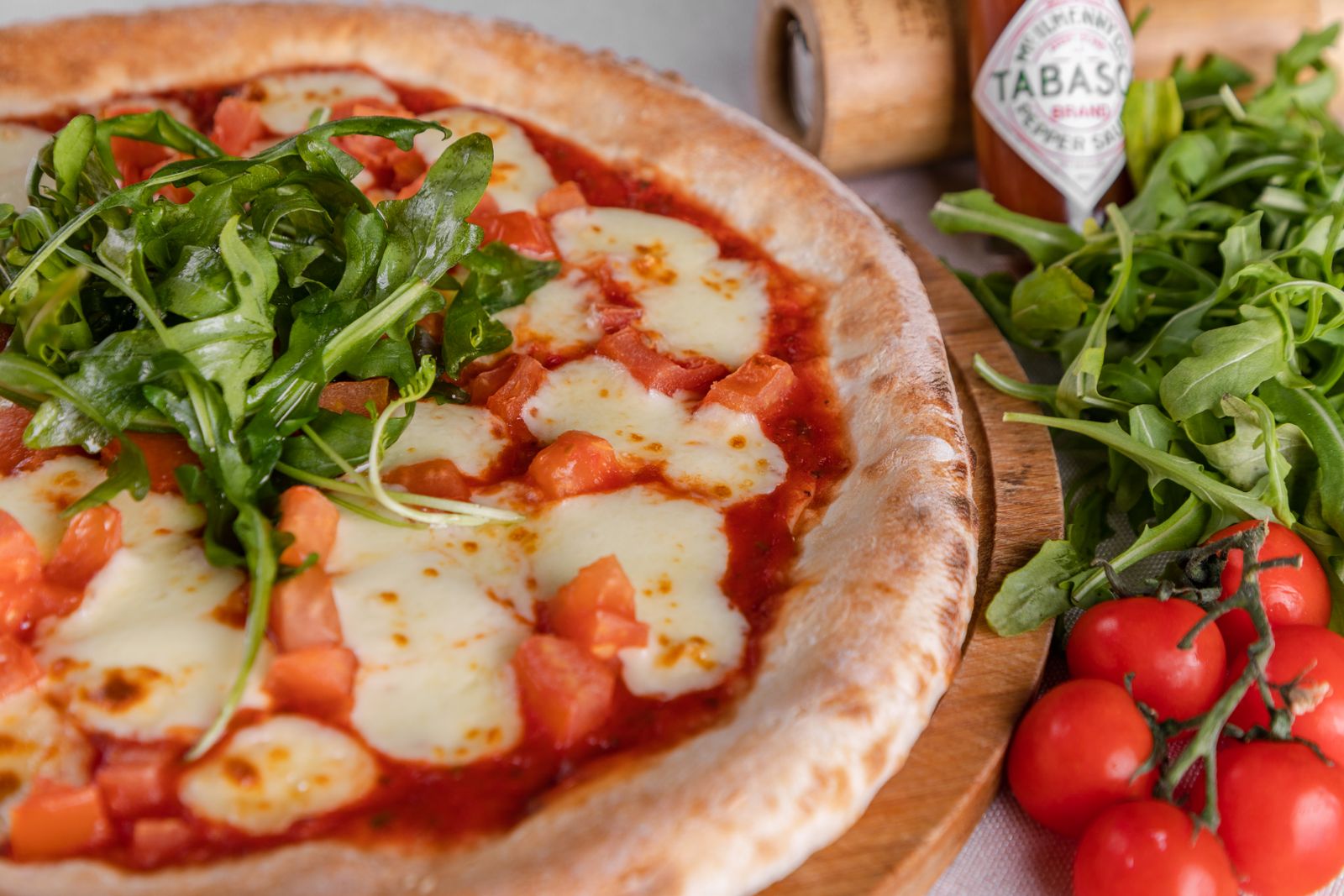
Cheese Pizza looks simple enough that people often treat it as a fallback, the thing you make when toppings are scarce or time is short. In practice, it is the version that exposes every decision. Without pepperoni, sausage, mushrooms, or hot honey to distract the palate, the crust has to taste like bread worth eating on its own, the sauce has to be bright rather than Cheese Pizza Brooklyn Pizza blunt, the cheese has to melt into a cohesive layer instead of turning greasy or rubbery, and the heat has to do its work in a narrow window. A great Cheese Pizza is not plain. It is precise.
That is true whether you are baking at home on a steel, running a backyard oven that tops 800°F, or working the deck in a busy shop where the rhythm of service matters as much as the recipe. The fundamentals do not change. You are balancing fermentation, moisture, fat, salt, acidity, and heat transfer. Get those right and a Cheese Pizza tastes complete, even luxurious. Miss one and the whole pie feels slightly off, even if nobody at the table can name the problem.
The useful thing about focusing on cheese pizza is that it sharpens judgment. You start to notice how a dough with strong fermentation can carry a lightly salted cheese blend, or how an aggressive tomato can flatten the sweetness of milk solids in mozzarella. You also learn that the oven is not just a box that gets hot. It is the final ingredient, because the same dough, sauce, and cheese behave very differently at 500°F, 650°F, and 850°F.
Why the basics matter more on a Cheese Pizza
On a loaded pizza, small defects can hide. A pale crust still picks up flavor from cured meat. A watery sauce can disappear under olives and onions. Slight overbrowning on the cheese may even seem intentional if the pie is otherwise bold. Cheese Pizza has nowhere to hide. It asks the dough to carry flavor and structure. It asks the sauce to taste of tomato, not sugar or dried herb dust. It asks the cheese to melt evenly and season the pie without pooling oil. Then it asks the oven to finish everything at once.
That is why experienced pizza makers often judge a place by its plain cheese slice. If the shop can make that sing, the rest of the menu is probably built on solid technique. The same logic applies at home. If your Cheese Pizza is consistently good, most topping combinations become easy.
Dough is the foundation, not just the container
A pizza dough recipe can look almost trivial on paper: flour, water, salt, yeast. Olive oil and sugar may appear, depending on style. The challenge is that those few ingredients are doing several jobs at once. Flour provides the structure, but not all flours absorb water or brown at the same rate. Water controls texture, extensibility, and fermentation speed. Salt strengthens gluten and shapes flavor. Yeast produces gas, yes, but just as importantly it develops aroma over time.
For Cheese Pizza, dough flavor matters more than many people realize. If the crust tastes bland, the pie reads flat even when the sauce and cheese are good. That is one reason long fermentation tends to outperform same day dough. A cold rise of 24 to 72 hours gives the dough time to develop a wheaty, slightly sweet, faintly tangy depth that pairs beautifully with dairy and tomato. It also improves handling once you learn its rhythm. The dough opens more willingly, the rim puffs with better internal structure, and the baked crust tends to color more attractively.
Hydration deserves a practical look. Many home bakers chase high hydration because it sounds professional, but wetter is not automatically better. For a New York style or home oven Cheese Pizza, roughly 60 to 65 percent hydration is often a comfortable place to work. It gives enough water for a tender interior while remaining manageable for hand stretching. If you are baking in a very hot pizza oven and aiming for a leopard spotted Neapolitan style pie, hydration may go higher, but the exact number depends on your flour, your room temperature, and your confidence with soft dough.
Flour choice shapes the final crust more than any Instagram trick. A bread flour with solid protein content usually gives home bakers a useful margin of strength, especially when using a steel or stone in a conventional oven. Italian 00 flour can perform beautifully at high temperatures, but some blends are optimized for ovens far hotter than most kitchens can produce. In a 500°F to 550°F home oven, a strong bread flour or a blend of bread flour and 00 often browns more reliably and gives a better chew.
The rim matters on Cheese Pizza because every bite includes more crust than people notice. A dead, dense edge makes the pie feel heavy. A properly fermented rim should be light, but not hollow, with enough blistering and color to taste toasted rather than merely dried out. When it tears open, you want a network of irregular air pockets, not a tight, cakey crumb.
One common mistake is overworking the dough after fermentation. People press out every bubble, then wonder why the cornicione bakes flat. Another is underproofing. Dough that springs back aggressively when stretched is telling you it is not ready. Give it time. That patience often improves the final pie more than any ingredient swap.
The case for restraint in sauce
Sauce on Cheese Pizza has a difficult job. It has to bring acidity, fruit, salt, and a touch of sweetness while staying light enough that the cheese remains the star. Heavy handed sauce turns the pie into a tomato delivery system. Too little and the pizza tastes dull and fatty.
The biggest improvement many home cooks can make is to stop overcomplicating the sauce. For a classic Cheese Pizza, especially one baked hot and fast, crushed tomatoes with salt are often enough. Sometimes a little olive oil helps round the edges. Sometimes a clove of grated garlic or a pinch of oregano works. But cooked sauces loaded with sugar, onion powder, basil paste, and black pepper can taste muddy once they hit the oven. The cheese and crust already bring richness. The tomatoes should cut through that richness, not join it.
Texture matters as much as seasoning. A sauce that is too wet floods the center and steams the cheese. A sauce that is too thick sits in a paste layer and blocks the pleasant blending of tomato and dairy. Good pizza sauce is usually looser than people expect in the bowl and drier than they expect on the baked pie, because much of the excess water has either been drained off before topping or driven off quickly in the oven.
Canned tomatoes are often the most reliable route, especially when fresh tomatoes are out of season. The goal is not to buy the most expensive can on the shelf. The goal is to find tomatoes that taste naturally balanced, with clean acidity and decent sweetness. If a batch runs sharp, a long simmer is not always the fix. Sometimes draining some water and adding a little salt is all it needs. If a batch tastes flat, adding sugar may hide the problem but will not improve it. Better tomatoes usually do more for pizza than more ingredients.
For Cheese Pizza, sauce quantity has to match the bake method. In a 90 second bake, a slightly wetter layer can survive because the oven is so fierce and the dough is thin. In a six to eight minute home oven bake, too much sauce often leaves the center soupy. It helps to think in grams if you want consistency. For a 12 inch pizza, many cooks are happiest somewhere around 60 to 90 grams of sauce, depending on style and dough thickness. That is not a rule, but it is a useful range.
Cheese is not one thing
People say “mozzarella” as though it solves everything, but cheese choice on pizza is more nuanced than that. Fresh mozzarella, low moisture whole milk mozzarella, part skim mozzarella, provolone, pecorino, parmesan, scamorza, and regional blends all behave differently under heat. Moisture level, fat content, salt, age, and shred size all affect melt, blistering, browning, and oil release.
For many styles of Cheese Pizza, low moisture whole milk mozzarella is the most dependable base. It melts evenly, browns attractively, and has enough fat to taste rich without instantly turning the surface into an oil slick. Part skim mozzarella can work too, and some shops prefer it for cleaner slices and less grease, but it often gives up a bit of tenderness and dairy sweetness. Fresh mozzarella can be wonderful, especially on Neapolitan style pies, yet it demands moisture control. If you tear fresh mozzarella straight from the container and pile it on, the pizza often bakes with puddles of whey across the top.
The practical fix is simple and often ignored. Drain fresh mozzarella well. Tear or slice it ahead of time and let it sit on towels for a while, or in a strainer over a bowl in the refrigerator. That one step dramatically reduces wet spots and improves browning. For home ovens, many bakers find that fresh mozzarella works best in moderate amounts, supplemented by a drier cheese for structure.
Blending cheeses is not cheating. It is often smarter than relying on one cheese to do everything. A base of low moisture mozzarella with a light finishing dusting of pecorino or parmesan can sharpen flavor without making the pie salty. A small proportion of provolone can add pleasant tang and a bit more character. The caution is that aged cheeses are potent. Used casually, they can overpower the clean balance that makes Cheese Pizza satisfying.
Coverage matters too. Dense, wall to wall cheese can suffocate the pie. You want enough to protect the sauce, melt into a continuous layer, and deliver that classic stretch, but not so much that the slice droops under its own weight. On many 12 inch pies, something in the range of 100 to 140 grams of low moisture mozzarella is a sensible starting point. The right amount depends on the style, the moisture of the sauce, and how much browning you want. With experience, you start judging by sight. The sauce should peek through in places before baking. If the top looks fully buried, you may have gone too far.
The way you cut the cheese also changes the result. Finely shredded cheese melts fast and evenly but can form a uniform blanket that browns quickly. Larger shreds or small cubes create more texture and patchier browning. Torn fresh mozzarella gives a more irregular, rustic finish. None of these is universally right. They simply create different surfaces, and the oven responds accordingly.
Heat is the ingredient that ties everything together
Most pizza problems are really heat problems disguised as recipe problems. People blame flour when the bottom stays blond, or blame the sauce when the center remains wet, when the oven setup is the real issue. Cheese Pizza rewards an understanding of heat because its ingredients are so exposed.
There are three kinds of heat at work in pizza baking: conductive heat from the surface under the dough, radiant heat from the oven walls or flame, and convective heat from the hot air moving around the pie. Conventional home ovens are usually weakest in radiant heat, which is why a broiler, baking steel, or both can transform results. The steel stores and transfers conductive heat far better than a sheet pan. Suddenly the bottom crisps and colors before the top dries out.
At home, a common setup is a preheated steel on the upper or middle rack, heated for 45 minutes to an hour at the oven’s maximum temperature. Some bakers finish the pizza under the broiler for a minute or two to drive top browning and better mimic deck oven radiation. That approach works because it solves the usual imbalance: decent bottom heat but insufficient top heat.
In a live fire or gas pizza oven, the equation changes. You may have abundant top heat and a floor that is either perfect or too hot. With Cheese Pizza, a floor that runs too hot can scorch the bottom before the cheese fully melts. A floor that is too cool leaves the crust pale while the top overcooks. Learning your oven’s floor temperature matters more than chasing a target dome temperature. Many pies fail because the baker trusts the air reading and ignores the stone.
These are practical temperature windows, not rigid laws:
- For a home oven with steel, a deck temperature near the oven maximum, usually 500°F to 550°F, works well for a five to eight minute bake.
- For New York style gas or deck oven baking, many pizzas thrive around 600°F to 700°F, depending on dough formula and thickness.
- For Neapolitan style pies, floor temperatures often land around 750°F to 850°F, with bakes closer to 60 to 120 seconds.
Even within those ranges, style decisions matter. A dough containing sugar or oil browns faster. Fresh mozzarella needs a touch more grace with the bake if you want evaporation without burning. A thicker layer of sauce may call for a slightly longer bake at a slightly lower temperature. This is where experience beats rules. You are reading the pie, not following a spreadsheet.
Turning and timing become especially important in hotter ovens. If one side faces the flame too long, the cheese may burn in spots before the opposite side has even finished melting. Good pizza makers learn to rotate at the moment the rim sets but before the top colors too deeply. That timing is hard to teach abstractly. You feel it after enough bakes. The dough releases cleanly, the structure holds, and the pie is ready to turn.
Assembly is a series of small decisions
A good Cheese Pizza comes together quickly, but not casually. The dough should be fully relaxed and dusted lightly, not caked in raw flour. The sauce should be spread evenly, leaving a border for the rim. The cheese should be distributed with attention to gaps and density. The launch should be immediate once the pie is topped.
The longer a raw pizza sits on the peel, the greater the risk of sticking, especially with wetter sauce or fresh mozzarella. That is why efficient assembly matters. Stretch first, sauce next, cheese last, then launch. If you need to adjust the pie on the peel, do it with a quick shake to confirm it still moves. If it does not, lift the edge gently and add a little flour underneath, but treat that as a rescue, not a habit. Excess bench flour burns on the oven floor and leaves a bitter taste.
There is also a judgment call with finishing touches. A drizzle of olive oil can enrich a leaner pizza. A little basil can brighten the dairy. A dusting of grated hard cheese can sharpen flavor. All of that can be useful, but none of it should be there because the core pie lacks character. If your Cheese Pizza only tastes good after a rainstorm of finishing ingredients, the answer is usually in the dough, sauce, cheese, or bake.
What usually goes wrong
When a Cheese Pizza disappoints, the defect is often visible before the first bite. The center may be wet and slack, the cheese broken and oily, the rim dense, or the bottom undercolored. Those symptoms point to specific causes.
If the center is soggy, look first at sauce quantity, fresh mozzarella moisture, and insufficient bottom heat. If the cheese turns greasy, suspect overbaking, too much cheese, or a cheese with poor melt characteristics for your oven. If the crust tastes flat, the dough likely needed more fermentation or more salt. If the bottom burns before the top finishes, your floor is too hot relative to your top heat, or your dough has ingredients that accelerate browning.
A few patterns show up repeatedly:
- Pale bottom, dark top usually means weak conductive heat or an underheated stone or steel.
- Burnt bottom, pale cheese points to excessive floor heat or a pizza placed too low in the oven.
- Wet patches around cheese often trace back to undrained fresh mozzarella or overly wet sauce.
- Tough crust can come from underproofed dough, excessive flour during shaping, or simply overbaking.
The reassuring part is that Cheese Pizza is an excellent teacher. Small changes show clear results. Reduce sauce by a spoonful, drain the cheese longer, move the steel up a rack, ferment the dough one more day, and the pie often improves immediately. Because there are so few ingredients, the feedback loop is fast.
A note on style, because not every Cheese Pizza should taste the same
When people argue about the best Cheese Pizza, they are often comparing different traditions without saying so. A New York slice and a Neapolitan margherita are both cheese pizzas in the broad sense, but they ask different things of dough, sauce, cheese, and heat. One may favor low moisture mozzarella and a crisp foldable base. The other may feature fresh mozzarella, softer crust, and a much faster bake. A tavern style pie wants cracker like crispness and edge to edge coverage. A pan pizza builds an entirely different relationship between cheese and heat, especially where the edges caramelize against the pan.
That is why formulas cannot be copied blindly. The ingredients have to suit the style, and the style has to suit the oven. Home bakers often get frustrated trying to recreate wood fired Neapolitan pizza in a standard kitchen oven with ingredients chosen for a 90 second bake. It is not impossible to make excellent pizza at home, far from it, but the smartest path is usually to lean into what your equipment does well. A steel baked Cheese Pizza in a home oven can be extraordinary when designed for that environment.
The mark of a finished pie
A well made Cheese Pizza announces itself before you taste it. The rim is inflated and colored, with some variation rather than a flat tan ring. The cheese has melted into the sauce instead of floating on top of it. The bottom has structure and color, enough to support a slice without turning brittle. When you cut or fold the pizza, the crust yields but does not collapse.
Then you bite it, and the sequence matters. First comes the toasted wheat of the crust, then the brightness of tomato, then the round, lactic richness of cheese, all balanced by salt and a little char. No one element dominates for long. That is the beauty of it. Cheese Pizza is not interesting because it is minimal. It is interesting because it forces harmony.
Plenty of elaborate pizzas are delicious, and there is no virtue in austerity for its own sake. Still, if you care about craft, it is worth spending time on the plain pie. Work on your dough until the crust tastes good naked. Work on your sauce until it tastes like tomatoes instead of “pizza sauce.” Work on your cheese selection until the melt, salt, and browning suit your oven and your style. Then learn your heat, because heat decides whether those good choices arrive at the table intact.
That is where Cheese Pizza earns its reputation. Not as the simplest pizza, but as the clearest expression of pizza making skill.
Brooklyn Pizza
1647 Arapahoe Ave
Boulder, CO 80302
+1 720-328-2324
FAQ About Cheese Pizza
What type of cheese is used on a cheese pizza in Boulder, CO?
The cheese varies by pizzeria. Brooklyn Pizza uses whole-milk mozzarella made in-house on its standard pies and offers a plant-based cheese option for vegan pizza. Ask the shop directly about ingredients if you have a dietary restriction.
How many slices are in a large pizza in Boulder, CO?
Slice count depends on how the shop cuts the pie. Brooklyn Pizza lists a 16-inch large pizza. If you are ordering for a group, call to confirm the number of slices or ask whether a smaller cut is available.
What is New York style pizza in Boulder, CO?
New York-style pizza usually has a thin crust and wide slices that can be folded. A classic cheese slice pairs tomato sauce with mozzarella. Brooklyn Pizza serves New York-style pizza by the slice and as whole pies.